


Buying Test Equipment From China: What the Price Gap Really Means
Table of Contents
Buying test equipment from China is no longer a fringe decision. Half of the quotations crossing our desk are from buyers who already own a European machine and are pricing a second or third unit for a new lab, a new plant, or a subcontracting line. They are not shopping for the cheapest option. They are trying to work out what the 40 to 70 percent price difference actually represents.
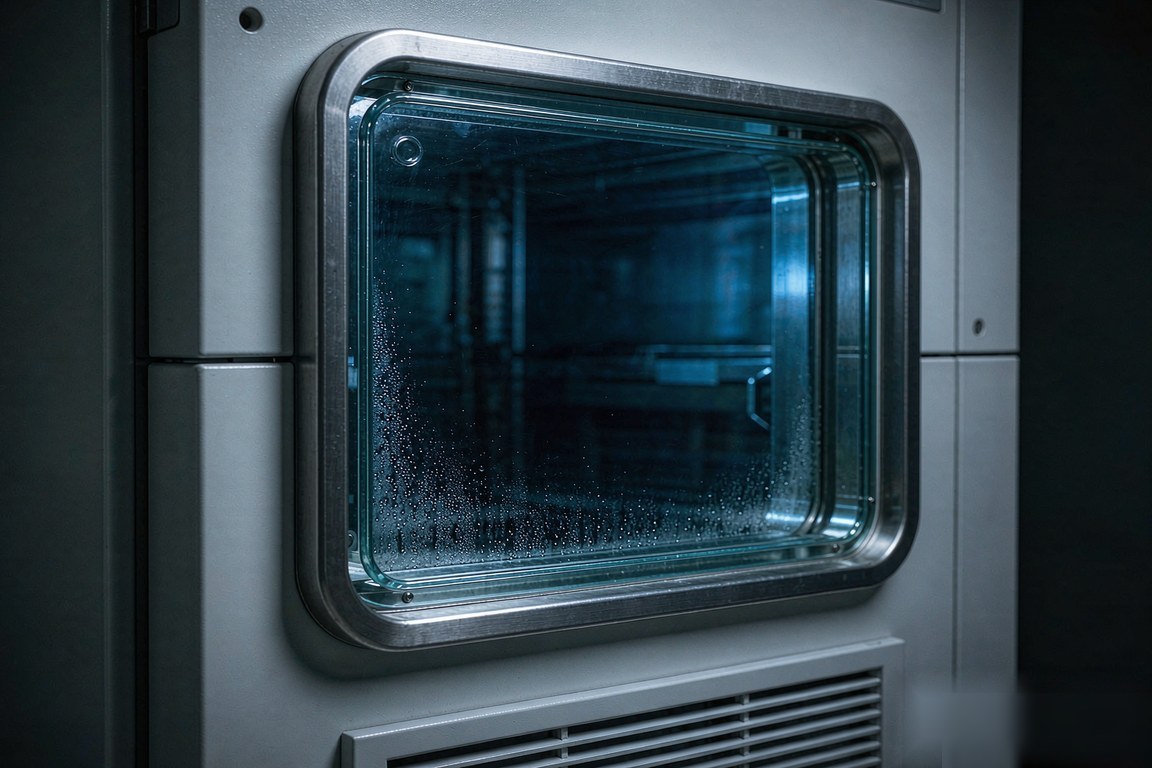
This article is written from the factory side, which means it is not a sales brochure. We build testing equipment in Dongguan, we compete with European brands daily, and we lose deals to them for reasons we consider legitimate. The same calculation applies whether you are pricing a climatic chamber, a tensile frame or a battery abuse line. Here is an honest account of where the price gap comes from, where Chinese machines are already equal, where they are not, and how to protect yourself if you decide to buy.
Why Is Buying Test Equipment From China Cheaper?
The gap is a cost structure, not a single trick. In our category, five factors explain most of it:
1. Manufacturing cost, not component shortcuts
A chamber cabinet is sheet metal, welding, powder coating and assembly. Doing that in house in Dongguan costs a fraction of doing it in Germany or Italy, and the difference lands in the price. The steel is the same grade, the 304 stainless is the same 304. What changes is labor hours, factory overhead and the number of people between the welder and the invoice.
2. Component sourcing at scale
Compressors, controllers, load cells and sensors are global products. We buy Tecumseh and Copeland compressors, Japanese and German sensors, and standard industrial controllers, in volumes that get better pricing than a European assembler buying a few hundred units a year. The bill of materials is often closer than buyers expect; the total price is not.
3. No dealer layer
A European brand typically sells through a distributor who takes 25 to 40 percent and provides local service, demo stock and credit terms. Buying direct from a Chinese factory removes that layer, along with the service capacity it funds. Whether that trade is good depends entirely on whether you can service the machine yourself, which is the subject of a later section.
4. Different certification and liability costs
CE marking, UL listing and the product liability insurance behind a European brand cost real money and are priced into the machine. Those costs buy you a documented compliance file and someone to sue if the machine hurts someone. A Chinese factory that self-declares CE has not spent that money, and the price reflects it.
5. Market position
Part of the gap is simply brand. A European name carries resale value, tender credibility and a phone number your auditor recognizes. That is worth something, and no factory in Dongguan can manufacture it.
Where the honest savings end: if a Chinese quotation is 80 percent below a European one for the same specification, something has been removed. Usually it is the refrigeration compressor brand, the controller, the thickness of the chamber insulation, or the safety devices. Ask for the component list by brand and model. A serious factory will send it.
What Does the Price Gap Actually Buy in Europe?
Typical 2026 price bands for new equipment, comparing a European brand through its distributor with a Chinese factory selling direct. Both are real numbers we see in competitive situations:
| Equipment | European brand | Chinese factory | Gap |
|---|---|---|---|
| Temperature humidity chamber, 408L, -40 °C | 45,000 to 75,000 USD | 9,000 to 16,000 USD | 65 to 80% |
| Tensile tester, 10 kN, servo, with extensometer | 55,000 to 90,000 USD | 14,000 to 26,000 USD | 65 to 75% |
| Carton compression tester | 22,000 to 40,000 USD | 5,000 to 9,000 USD | 70 to 80% |
| Battery nail penetration tester, 20 kN | 90,000 to 150,000 USD | 18,000 to 32,000 USD | 75 to 85% |
| Furniture test line, BIFMA scope | 120,000 to 250,000 USD | 40,000 to 90,000 USD | 55 to 70% |
What the European price includes that the Chinese one usually does not: a local service engineer within a day or two, a documented calibration traceability chain, an accredited third-party type test, software updates for a decade, and a compliance file that satisfies a notified body without argument. If your customer is a tier-one automotive supplier or a national metrology institute, some of those items are not optional and the price gap is smaller than it looks.
Where Chinese Machines Are Genuinely Equal
Some categories have become commodity engineering. The physics is settled, the components are global, and the remaining difference is sheet metal quality and assembly discipline. In these categories we compete on delivery and customization, not on technology:
Environmental chambers. Temperature humidity, thermal shock, altitude. A well-built 408L chamber with branded compressors performs to the same IEC 60068 tolerances as a European one, and we publish the uniformity report to prove it. Our temperature humidity test chamber guide explains how to compare the specifications line by line.
Static mechanical testers. Tensile, compression, peel, bend. A 10 kN servo frame with a decent load cell and good software is a solved problem. The differentiator is the fixture design and the software, not the frame.
Packaging testers. Carton compression, drop, vibration, burst. These are simple machines with simple specifications, and Chinese factories have been building them for two decades.
Furniture and luggage test rigs. BIFMA, EN 1728, SATRA methods are well documented, and the machines are purpose-built fixtures with actuators. Customization is often easier in China because the factory has its own fabrication shop.
Battery abuse equipment. Nail penetration, crush, impact, short circuit. This is where Chinese suppliers actually lead on price and often on delivery time, because the domestic EV industry created enormous demand. The comparison of nail penetration and crush testing covers what each machine has to do.
Where They Still Lag
Three areas where we tell customers to buy European if the requirement is real. Saying this costs us orders, and it is still the right advice:
High-end dynamic and fatigue testing
Servo-hydraulic fatigue systems with multi-axis control, advanced waveform generation and long-term stability data are still European and American territory. The controllers, the software ecosystem and the accumulated validation data are decades ahead. A Chinese frame can be built, but matching the control performance and the service support is another matter.
Metrology-grade measurement
If your uncertainty budget is tight enough that the calibration chain matters more than the machine, buy from a brand whose traceability your accreditation body already accepts. The cost of arguing about traceability later exceeds the saving.
Long-term software and data ecosystems
European brands have twenty years of LIMS integration, method libraries and firmware updates behind them. Chinese software has improved a lot in five years, and it is still thinner at the top end. If your lab runs a validated system with audit trails, check the software before the hardware.
A fair way to think about it: Chinese equipment has closed the gap on machine performance much faster than on institutional assurance. If your risk is technical, the gap is small. If your risk is regulatory or reputational, price the assurance separately and decide what it is worth to you.
What About CE Marking and Calibration?
This is where buyers get hurt, so it deserves plain language.
CE marking
CE is a self-declaration for most machinery. A Chinese factory can print a CE mark and a declaration of conformity without any third party ever seeing the machine. Some do exactly that. A credible supplier will show you the technical file, the applicable directives and standards, the risk assessment, and preferably a test report from a recognized laboratory for the EMC and safety items. Ask for the declaration's issue date and the standards list. If it cites a standard that does not apply to the machine, walk away.
Calibration
A Chinese factory calibration certificate is a manufacturer's certificate, not an accredited one. If your quality system requires ISO/IEC 17025 traceability, plan for a local accredited calibration after installation, and budget for it. On a chamber that means a multi-point verification with a calibrated logger; on a tensile machine it means load cell calibration with certified weights or a proving ring.
We ship machines with a factory verification report and tell customers to arrange local accredited calibration before their first audit. Pretending a factory certificate is equivalent is how relationships end badly.
What Does Five-Year Cost of Ownership Look Like?
Purchase price is the smallest part of the decision, and the part everyone negotiates hardest. A realistic five-year view for a mid-size environmental chamber, which is the category most buyers start with when buying test equipment from China:
| Cost item | European brand | Chinese factory |
|---|---|---|
| Purchase price | 55,000 USD | 13,000 USD |
| Freight, insurance, duties | 2,500 USD | 3,500 USD |
| Installation and commissioning | Included | 2,000 USD (local technician) |
| Annual calibration (5 years) | 4,000 USD | 4,000 USD |
| Spare parts, 5 years | 3,000 USD | 4,500 USD |
| Downtime risk, 5 years | Low, fast local service | Higher, plan for a spare controller |
| Five-year total | About 64,500 USD | About 27,000 USD |
The gap survives the total cost view, which is why the decision keeps being made. What changes it is downtime. If a chamber failure stops a production line for two weeks while a part ships from Shenzhen, the saving evaporates. The mitigation is not to buy European; it is to order a spare controller, a spare sensor set and a spare door seal with the machine, and to agree a response time in the contract.
How Do You Vet a Supplier When Buying Test Equipment From China?
Six checks that separate a factory from a trading company with a website. They matter more than the quotation, because the difference between a good and a bad experience is almost never the machine design.
Ask for the workshop, not the showroom. A video call walking through the welding area, the paint line and the assembly bay tells you more than a catalogue. Trading companies cannot fake a production floor on a live call.
Ask who designs the machine. An engineering team with drawings and a revision history is a factory. A supplier who forwards your question to someone else is a middleman.
Ask for a factory acceptance test. Insist on witnessing the machine running at your specification before shipment, in person or by video. A supplier who resists this is telling you the machine has not been tested.
Ask for two references in your region. Then call them and ask what broke. Every machine breaks something; the answer tells you how the supplier responds.
Ask for the component list by brand. Compressor, controller, load cell, sensors, contactor. If the list has no brands, the components have no brands.
Ask about spare parts stock. Which parts are held for your model, and what is the lead time for a compressor or a controller board. A factory that builds to order often holds nothing.
What Belongs in the Contract?
The commercial terms matter as much as the technical ones. What we see work well in practice:
Payment: 30 percent deposit, 70 percent after a witnessed factory acceptance test. Avoid full prepayment; avoid full payment on shipment without a test.
Acceptance criteria: written into the contract, referencing the standard and the verification method, not just "to specification".
Warranty: 12 to 24 months on the machine, with a defined response time and a parts list included.
Spare parts: a recommended first-year kit priced into the order, and a commitment on availability for a defined number of years.
Documentation: operation manual, maintenance schedule, electrical drawings, controller parameters and a calibration report, in English, delivered before shipment.
Training: either on site during commissioning or a recorded session with the engineer who built the machine.
IP and customization: who owns the drawings for your custom fixture, and whether the supplier may resell the same design.
None of this is exotic. It is the same list you would put in a contract with a European supplier, and asking for it is a fast way to find out who you are dealing with.
Buying Test Equipment From China FAQ
Is Chinese test equipment reliable?
For mature categories like environmental chambers, tensile testers and packaging testers, yes, when the components are branded and the factory tests before shipment. The failure pattern we see is not "Chinese machines break", it is "untested machines break". A witnessed factory acceptance test removes most of the risk, and it is the one habit that separates buyers who are happy with buying test equipment from China from those who regret it.
How much can I actually save?
Typically 55 to 80 percent against a European brand at comparable specification, depending on the category. The saving is smaller once you add local calibration, a spare parts kit and the engineering time to manage the project. Budget 10 to 15 percent above the quoted FOB price for those items.
Will a Chinese machine pass my customer's audit?
Usually yes for a machine audit, if the documentation is complete and the calibration is accredited locally. If your customer requires a specific brand by name in their specification, no amount of documentation will substitute. Read the specification before you negotiate.
What is the lead time?
Standard machines run 25 to 45 days from deposit, custom machines 45 to 75 days, and full test lines longer. Add 25 to 40 days for sea freight and customs. Anyone promising two weeks for a custom chamber is either stocking it or not building what you asked for.
How do I handle warranty service from another continent?
Three mechanisms work: a local service partner the factory already uses, a remote diagnosis protocol with video and controller logs, and a spare parts kit shipped with the machine so a local technician can swap a board or a sensor. Get the response time in writing. "Lifetime support" means nothing without hours attached.
Is it safe to pay a Chinese supplier directly?
Yes with normal precautions: pay to the company account named on the contract, never to a personal account, verify the company registration, and use a payment method with documentation. Structuring payment around a witnessed factory test protects you more than any payment channel.
Do I need to visit the factory?
It is the single most useful thing you can do, and it is not always practical. A live video walkthrough with the production manager, plus a witnessed factory test, gets you most of the information for a fraction of the cost. If the order is large enough to justify a trip, go.
Buy Direct, but Buy With Your Eyes Open
We are a Chinese factory, so treat this article as biased in one direction and honest in the other. We build eight series of testing equipment to ISO, ASTM, UL and EN methods, we ship factory acceptance test reports with every machine, and we tell customers when a European brand is the better answer for their requirement.
Send us the specification you are comparing, including the European quotation if you have one. We will tell you which line items we can match, which we cannot, and what the five-year cost difference looks like with spares and calibration included. If the honest answer is to stay with your current supplier, we will say so.
Witnessed factory acceptance testing, in person or by video
Component list by brand and model supplied with every quotation
Spare parts kit and response time agreed in the contract, not in a brochure
WhatsApp {{WHATSAPP}} | Email {{EMAIL}} | Request a quotation
